

Introduction: Witnessing Disaster Porn
Photos, videos, and stories from Hurricane Ian crowd my phone. Over in Florida, yet it feels like Yogi Berra’s déjà vu all over again. Since Katrina (2005), we float in clouds of voyeuristic disaster-porn, tales of terror and loss illustrated with visuals of wrecked, flattened, splintered or burned-out communities. I recall entrepreneurial types adlibbed disaster tours to New Orleans’ devastated Lower Ninth Ward. Amazing no one came up with a “running for their lives” storm-surge video game, or perhaps by now somebody has, and I missed it. Real life can be so much scarier than any made up zombies. And I wonder about the ethics of turning other folks’ suffering into spectator “sport.” Not possible where I live: we’ve been on both sides, morphing from observer to observed, in a kind of whiplash, depending on storm tracks. Could be us on camera next. Last year, with Ida, it was.
Climate Change Controversy: The Battle of Narratives
Is this climate change in action? Depends on which stories you believe and who’s telling. Scientists who parse the data say yes, probably, with their usual caveats that environmental science can’t control for all variables. Culture warriors politicize without proof, question/scorn the science, insist humans aren’t to blame anyway. Florida Governor DeSantis did blame the “liberal regime media” for wishing Ian would hit more populous Tampa, “because they hate Florida.” Really?! Like sticking pins in a voodoo doll?!
Environmental Impact: From Storms to Earthquakes
From where I sit though, whatever’s happening does seem to have us surrounded. To paraphrase Tennyson’s Charge of the Light Brigade, we have storms, rain, and flooding to the right/east of us (Kentucky, Florida), and wildfires, heat waves and drought to the left/west (California, Arizona, Colorado). And the Mississippi River, along its entire length, is at its lowest level in years. Here in Louisiana, the US Army Corps of Engineers is dredging to prevent saltwater intrusion up from the Gulf of Mexico and into drinking water. And recent research suggests melting glaciers and rising oceans may contribute to earthquake activity.
Manufactured Denial: Unmasking Corporate Influence
A mistake to treat denial and science skepticism as natural phenomena. They’ve been created, marketed, sold. “Documents reveal that ExxonMobil has known since the late 1970s that its products cause global warming. A decade later, the company ignored its own scientists and financed a campaign to deceive shareholders and the public about the realities and risks….” (Union of Concerned Scientists. 2016). And in 1991, the conservative Koch-backed Cato Institute convened a conference titled “Global Environmental Crisis: Science or Politics.” (Geoff Dembicki. From his book The Petroleum Papers excerpted as How Koch Industries, Fake Scientists, and Rush Limbaugh Invented Climate Denial. Vice. October 14, 2022). And now a recent report shows that “half of the 50 largest sources of greenhouse gases in the world were oil and gas fields and production facilities,” and owner-operators underreport their emissions by a factor of three. (Fiona Harvey. Oil and gas greenhouse emissions ‘three times higher’ than producers claim. The Guardian. November 9, 2022).
Vulnerable Regions: Ground Zero and the Canary in the Coal Mine
Florida’s been called “ground zero” for sea-level rise, Louisiana’s been called “the canary in the coal mine.” Both extend out into the Atlantic and Gulf of Mexico and regularly in the path of extreme weather. And they’re low lying “water worlds,” with blurred edges where land begins and ends, in which “man” has felt free “…not so much [to] adapt to nature as he has reordered nature to serve his own ends.” (Nelson Manfred Blake. Land Into Water, Water Into Land: A History of Water Management in Florida. University of Florida. c1980, c2010).
Lessons from Environmentalists: A Call for Change
I reach to my bookcase for Frederick Turner’s Rediscovering America: John Muir in His Time and Ours (Sierra Club Books. c1985). The proto environmentalist and Sierra Club founder told a different story situating humanity within nature and helped convince Teddy Roosevelt to start the National Park system. My copy has history; the author’s gift to my husband, inscribed “For Bob Jones, with many thanks and admiration.” He referred to Bob’s work designing and building barrier island restoration projects to protect Louisiana’s disappearing coast, eroded by over a century of deforestation of virgin cypress, and digging of lumbering and then oil field canals and pipeline channels. No complete maps even exist; apparently nobody bothered in the early days. Perhaps they assumed it didn’t matter, would make no difference. I also pull out Mike Tidwell’s Bayou Farewell: The Rich Life and Tragic Death of Louisiana’s Cajun Coast(Vintage Departures. c2003), on the human costs to communities of fishers and oilfield laborers, rooted in generations of family, history, and folk culture, as rising waters lapped at and ate away their home places.
Denial and Consequences: Sacrifice Areas
The concept “Sacrifice Area” applies. Wikipedia definition: lands “permanently impaired by heavy environmental alterations….” A 2022 UN report found millions around the world in such areas, “particularly in those used for heavy industry and mining.” In a variation on old colonial mercantile systems, some places and peoples provide (natural resources, raw materials) and absorb impacts of extraction, while central/metro areas and corporations consume and reap most benefits. And when resources and/or economic value play out, used up communities are abandoned with wastes from activities that made them complicit in their own ruin. Today, post-industrial, we struggle to reframe a national identity if our great expansion is over. “[E]nvironmental optimism is hard-wired into [our] character….Even in…[a] tight spot, not many want to hear that the country has finally come to the end of its providential allotment of inexhaustible plenty….” And there’s “a sense that if nature comes up short, that other infinite resource, American know-how, can make up the difference.” (Simon Schama: The American Future: A History. Harper Collins. C2009).
Global Response: COP27 and the Path Ahead
Denial undercuts preparedness. “Your failure to plan does not equal my emergency.” Bob posted that statement above his desk. Imprudent decisions range from homebuyers failing to check on flood hazards or purchase flood insurance to governments and corporations linking their best interests to fossil fuels. As the futurist Ari Wallach noted, “….we carry short-termism on in our daily life at the expense of our future self, and—perhaps most important—the expense of future generations.” (Longpath: Becoming the Great Ancestors Our Future Needs. Harper One. c2022). We’re also prone to “disaster amnesia,” lulled by the calm between storms to fall into wishful thinking that it won’t happen again. After Hurricane Lili (2002), I told Bob, “99% of the time, it’s a great place to live, but there’s that .1%.” Since Hurricane Andrew (1992), over 5 million more people have moved to Florida, a good number into Ian’s path. But, even when lessons strike close to home, people can be slow learners. A post-Ian Wall Street Journal headline read “Home Buyers Flock to Florida Cities Devastated…, with a sharp price run-up.”
Looking Forward: Paradigm Shifts in Global Response
So, we’re in a cliffhanger, but still not ready to make hard decisions. This year’s UN environmental report finds “no credible pathway” for global nations to reach their commitments to Paris Accords’ carbon emissions goals. As for the private sector, ”…. companies are setting goals they don’t know exactly how they can deliver on, [as] the pressures….to [publicly] respond to climate change build.” (Catherine Clifford. Companies are making climate pledges they don’t have the capacity to keep. MSNBC. October 26, 2022). The UN report concluded “…the only way to limit the worst impacts …is a ‘rapid transformation of societies.’ “ (Damian Carrington. Climate Crisis. The Guardian. October 27, 2022).
As I write, world leaders are meeting at the COP27 climate conference in Egypt. Regular review of progress on commitments either creates “a space to manage climate change” in a “zone of peaceful competition, collaboration, and one-upmanship” (Robinson Meyer. The Paris Agreement is Working…For Now. The Atlantic. November 9, 2022) or it’s yet another empty exercise of elites talking to each other. Some of the biggest emitters—China, Japan, India, Australia, Canada—chose not to send top officials this time. And yet there’s finally talk of “damage and loss” reparations—what big-emitter wealthy nations owe to non-emitting poor nations hit by climate-related disasters. There’s even been some discussion of private sector financial contributions, though no clarity on how that might work. (Allyson Chiu, Sarah Kaplan, Siobhan O’Grady, and Michael Birnbaum. COP27 live updates: U.N. chief calls for global climate pact, warning of ‘highway to climate hell’. Washington Post. November 7, 2022).
Preparedness and Future Generations
Paradigm shifts occur when existing models no longer provide adequate solutions and answers. After over 40 years, climate change remains a “wicked” problem. “…The fate of civilization depended on it…. But it wasn’t a political problem…. Political problems had solutions. And the climate issue had none. Without a solution—an obvious, attainable one—any policy could only fail.” (Nathaniel Rich. Losing Earth: A Recent History. Farrar, Strauss and Giroux. c2019). A Guardian documentary titled Climate carnage askswhose job is it to save the planet? Key actors’ non-attendance sends a message, as does the presence of over 600 energy industry lobbyists. Both suggest cozy government-industry-economy relations that make short-sighted choices seem like the only possibilities, even as “…global challenges like climate change, pandemic disease, financial crisis, and tech disruptions are exploding and are on a collision course with fragmented geopolitical structures….” (Wallach).
The Role of Activism
“[C]an we make a better us?” Fitting that Wallach raised the critical question standing on a beach, another in-between water world. And, sand shifting underfoot, he coined the term “Intertidal” to refer to bigger and potentially cataclysmic changes like those currently happening. “…[U]nderlying ideas, narratives, and rules of what it means to be human….[are] called into question.” When “old ways of being and doing no longer work….” and “complex interactions have increased, but trust has fallen to historic lows.” Yet elites, nations, corporations still try to play by old status-quo rules, though their vested interests and conflicts of interest keep getting in the way.
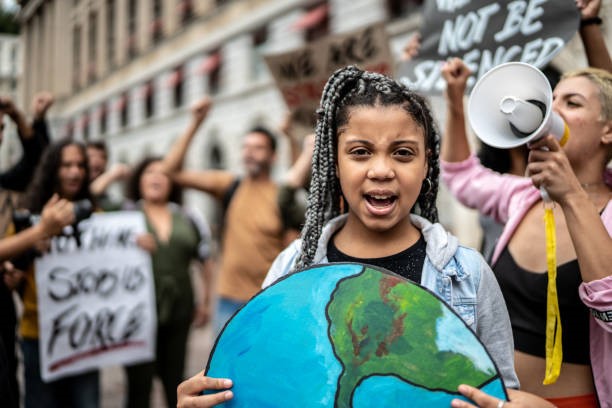
Meanwhile, young people, not content to wait, are going outside official channels and taking matters into their own hands. They understand the stakes, that we’re all in this together, on this small, crowded, and damaged planet. They’re the ones who’ll have to live with what comes next. And that has me thinking about who’s on the inside and who’s left outside. Was it intentional that the venue’s a resort area, with hotels allowed to charge “exorbitant” rates young climate activists often can’t afford? And that the host country is closely tied to Gulf oil states like Saudi Arabia and has an oppressive regime that would violently crack down on and possibly jail demonstrators? There was a lot of outside action at COP26 in Glasgow.
That brings to mind other activists—Tiananmen Square, Hong Kong, the Arab Spring, Iran, etc., etc. And I’m reminded of the old Whack-a-Mole carnival game. Folks rise up in one place and they’re beaten down, some even killed, but then other folks rise up somewhere else. Why do they take the risk? Remember Emma Lazarus’ verse on the base of the Statue of Liberty. People everywhere “yearn to breathe free.” As the economist Alice Rivlin stated, “…average citizens are far more able to engage in civil, constructive dialogue on public policy issues than politicians [and elites, nations, corporations] are,” and with life and the future at stake “they are more willing to hammer out pragmatic compromises.” (Forward to Bringing Citizen Voices to the Table. Carolyn J. Lukensmeyer with Wendy Jacobson. Jossey-Bass. C2013). Perhaps, together, we can take things into our hands and find our way forward.