

Writing and Finishing My Book/Novel
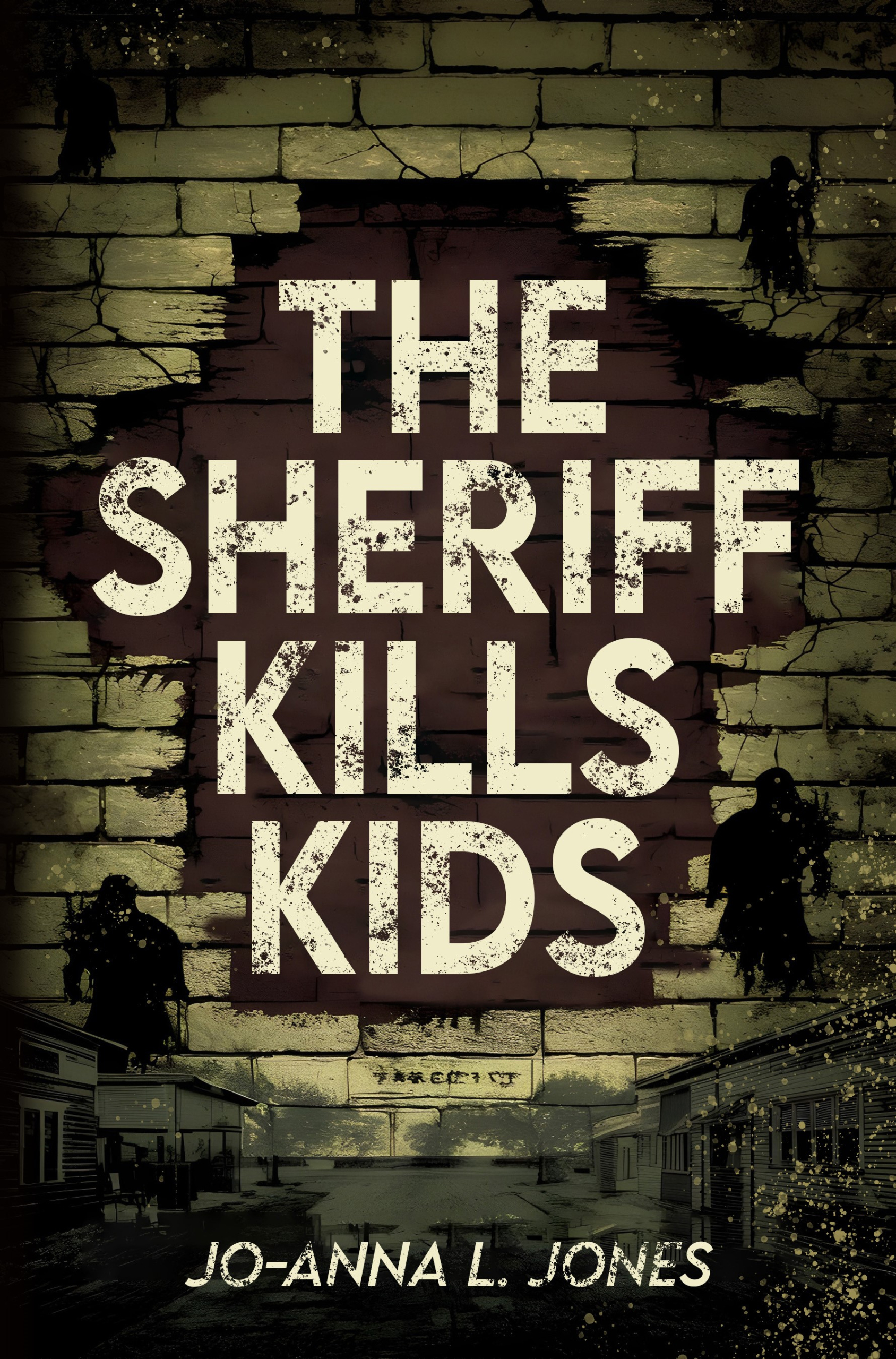
So, I just finished my book/novel. It’s titled The Sheriff Kills Kids. I feel both proud of myself and a bit befuddled. What am I supposed to do with myself now? Took me about 10 years, not that I spent the whole time continuously writing. When people ask what it’s about, I say it’s about two women who are side girlfriends of a local Sheriff and DA. Lacking any power, they combine with a bunch of even more powerless street kids to try to make the men lose an election.
What Else Is My Book About?
What else is my book about? Even I didn’t quite get that till I finished: it’s about having no power but doing what you need to/what you must do/what you’re compelled to do anyway. It’s also a tale of grief and loss: people/kids do die. And it’s a coming-of-age tale, as well as a revenge tale.
The Very Idea of a Novel
Novel means “new,” but after 10 years, can’t say this is new or that I’m new to it. Can say that I have reinvented it multiple times. I found ways to tighten the story, build in more tension and complicate relationships. And so, the writing kept surprising me. I have learned so much more than I expected about and through these characters. Helped that I came to like my main characters and at least understand, to some degree, the villains they come up against. And I’ve learned so much about myself too. So, the work has been a stretch, but it’s never grew old and stale. The process stayed alive, kept coming back to life as I spun out the storylines. As they spun out ahead of and sometimes back behind me. I’d go to bed not knowing what came next, but then I’d wake up in the morning and it would be there. And I recalled my first writing teacher, an old socialist/communist, on his second career, after being blacklisted out of the union movement, where he’d been an organizer. He said, “If you’re not learning anything from your writing, you’re not writing it right.” Amen.
Ten Years Is a Long Time
There is a time factor: do works in progress have limited shelf lives? That did not happen with me with this book. I kept finding my way back to it. Susan Gilbert (Eat, Pray, Love) has said that taking on a novel is making a commitment of two years of your life. For me, that was clearly an underestimate, an understatement. I had about 100 pages a few years back. Took them to an editor with a writer’s workshop and asked/paid her to read. She told me you have a novel, but you need about 100 more pages. I put it aside and then was encouraged to pick it up again by the folks who help me with marketing and presentation of my blog. So, they have done extra duty. I went back and rewrote the 100 pages and then added in the rest. And now, here we are. Here I am. The book is now a bit over 200 pages. It will be on Amazon. And a chapter at a time on WattPad. It will be in a short run (50 copies) in hard copy
How’d I Come Up With the Story?
People always ask where the story came from. I can only say that stories are everywhere. Just have to keep your eyes and ears open. I have been doing that all my life. Known for kind of “interrogating” visitors when they came to the house. “Are you married? Do you have kids?” Knowing my mother, she told me to stop. No one wants to hear from you. Children should be seen but not heard. Yet I couldn’t stop. I had the gift of curiosity, the burning need to know about other people. What were their stories?
Sharing Stories
I have known one woman who asked and her husband since we all worked for FEMA after Hurricane Katrina (2005). My husband had died the year before and I was still in walking-wounded territory. Her now husband was a team lead, and they met when she joined his team. FEMA as cupid! I was on another team, with more challenging folks. Clueless team lead and two exhibitionist/narcissist women, one of whom I’d known before and who tried to get me fired. She did not succeed. On the positive side, I shared a table with a good partner, and he and I laughed a lot. And I staked out my territory, collecting info and serving as coastal and environmental lead
I could have told my friend there was a story there, but it isn’t one I want to tell. I didn’t feel moved to spend any more time in that world than I already had. I didn’t do the online disaster management training other folks did either. Didn’t feel drawn to specialize in that direction.
More on Where Stories Come From
This story, this book, is one I needed to tell. The story came, as they always do, from listening and watching life happen. And then embroidering and weaving strands together. The two women/side girlfriends are at the heart, form the core/hub of the book. They have the powerlessness women share. But then they find work arounds. I think of what my sister, an artist, once said when asked (by a man of course), if she felt like God in making the “worlds” she did. She told him, “I can’t be God; I’m a woman
Moving out from the main characters, I found other snatches of stories that at first seemed to have nothing to do with the main theme. But somehow they had a congruence, rang true, with the core story. And I found ways, backstories, to massage them to fit: Street kids another set of powerless people. And together they become more than the sum of their parts. A bunch of Davids taking down Goliaths. Because they had nothing to lose?
My sister also said, “We are stardust.” Creativity takes us to miracles beyond our reach. What we didn’t know and didn’t expect. Though we insist on acting like it’s all mundane and every day. Yet we don’t know where and how stories might turn up and where they could take us.
Longer Commitment
To write this piece, I’ve also paid attention to what other writers have said about their writing processes. For a while, I subscribed to a newsletter called Writers Ask…Short pieces told of losing jobs, going through divorces, withdrawing to cabins in the woods, having no alternative and not coming out till they crossed the finish line or thought they had. Can’t find those pages now; it is so easy to lose things that once mattered. I do have the non-fiction book Blue Highways, which William Heat Moon spent four years writing. He started during and after a divorce, then moved into another relationship that fell apart when he found a publisher. Interesting how that can happen even in good times. Later, he wrote a couple other non-fiction road books, with a publisher who had turned down the first book, not seeing a market. Turns out they were wrong: the book made the NY Times best-seller list. He taught college-level creative writing. Then he penned Writing Blue Highways. To try to understand his journey? I understand/get how writing a book/story became part of identity, and can be hard to let go of. Trying to get it perfect, though knowing it never can be. Eventually you have to release it and put it out into the world
Useful Blue Highways Insights
- “…If the circle had come full turn, I hadn’t. I can’t say, over the miles, that I learned what I had wanted to know because I hadn’t known what I wanted to know. But I did learn what I didn’t know I wanted to know.”
- “Each day, I made sure to at least touch the manuscript …Fearing a halt in the writing for even a single day…allowed myself no escapes from the work. A writer finds confidence in continuance. Step away too long, and morale, dedication, tenacity might just fizzle out….Neither liking or disliking the writing tasks, whatever they were, I merely did each day what needed to be done next, and it had nothing to do with inspiration and everything to do with simple execution. I became the doing itself, and that helped nullify, in moments of weariness, a sense that I was just scuffling along the drop edge of yonder.”
- Not like that for me: I hadn’t revisited what I’d written for a long time. I had to track down and excavate from my computer(s). Again, so easy to lose. But when I came back, I found the story was still there. Still in me.
- “…so I did what writers do: stared. Finally something whispered, For now, forget about getting it right and just write!
- “What the hell: Everybody’s a writer the first day. It’s the days thereafter when one may discover that having a story to tell differs from having the discipline to tell it, which differs yet further from the dedication to tell it well.”
- “To become a writer, one must first pretend to be a writer.”