

Life Lessons from Dead Cats
New Title: Reflections on Feline Companionship: Lessons Learned and Paths Forward
Farewell to a Furry Friend: Navigating the Difficult Decision to Say Goodbye
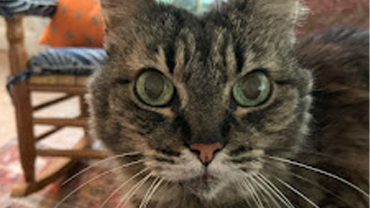
A few weeks back, I had to make the decision to say goodbye to my last cat. Not easy: she’d been with me 18 years but had aged into kidney failure and now had a spreading skin-cancer sore on her chin. Treatment options: cutting out a piece of her jaw (!) or chemo her non-functional kidneys couldn’t handle. No, thanks to both. And I didn’t fool myself. Not in constant, yowling, pain yet, she could have lived much longer. But why wait till she dwindled down to nothing but suffering? And so, after almost 30 years living with cats, I find myself alone in my house for now. I still feel her presence, the way she knew the sound of my car and would greet me at the front door, the way she’d snug up against my hip or my arm at night. And along with her I carry memories of all my other cats who’ve gone before.
Pets in Modern Society: Exploring the Evolving Role of Animals as Family Members
As usual, personal experience led me to social trends, like when and how pets became “part of the family.” The Oxford English dictionary added “fur babies” in 2015, but that only recognized existing common usage. The Australian luxury pet brand Molly Barker (The Rise of the Fur Baby and Generation F. mollybarker.com.au) noted that “65% of dog owners completely consider them a full-fledged member of the family and social media users post on average 6 times per week just about their dogs!” And “Millennials are now becoming such fans of having pets, it’s taking over from their desire to have children.” Hence the term “pet parent,” rather than pet owner, as per a Quora Q & A? Does this reflect the epidemic of urban loneliness, alienation, and yearning for companionship, amped up during the pandemic? “Owners know that their dogs will love them unconditionally for their entire lives, giving them the same emotional attachment that can be gained from having children.”
The Cat’s Charm: Understanding the Endearing Qualities of Feline Companions
Barker, focused on dogs, noted how much cheaper pets are to raise than kids. She did not mention reductions in adolescent rebellion. But that, of course, does not apply to my preferred species. My favorite thing about cats is that they’re convinced they own us. Though small, they have large personalities, approach us as equals, if not superiors. Sweet, yet efficient and deadly predators, they’re sassy, brazen, defiant. They constantly remind us how little control we truly have in this world. On the downside, they don’t live as long as we usually do. One of those mismatches we know going in but push aside in the early, cute, healthy, years. I named her Rebop. She came to my door as a stray kitten, long-haired, black on gray. Short for Be-Bop-a-Rebop, a la Garrison Keillor’s sham ads for rhubarb pie. And there was an old rock-n-roll song. I cobbled together my own version and would pick up for a serenade-dance. “Be-Bop-a-Rebop, she’s my baby. She’s the one with the tufted toes. She’s the one with the terra cotta nose. She’s the one with the cute little pinkish chin. She’s the one who loves me so.” And I loved her back. What a gift to be unguarded and silly with a little companion.
A Journey to Cat Parenthood: From Dog Yearning to Embracing Feline Friends
We stereotype the differences between cat and dog people. Independence versus slavish devotion? Mutual incomprehension mixed with mutual scorn? As a child, I’d yearned for a dog. I read Alfred Payson Terhune’s Lad, A Dog series, with canines often smarter than their humans. And I’d been put off by the fierce and intimidating, multi-litter, mama cat next door. So, how did I convert? It was a process. A former roommate had cats I got to know as individuals. And my husband Bob had had cats before. And to tell the truth, they snuck up and then won me over. Where we lived, in the country, locally called “down the bayou,” strays got dropped off at the head of the road and our house was the first they came to. And it was easy, not a lot of work. We had parallel lives: the cats could go outside, didn’t need a litter box, were free to roam. They’d come back to the house to eat, to hang out, for affection. I set a limit, no more than 3 at once. Reduced to 2 when I moved up to town and it became more work (those litter boxes!!) and I decided it was safer to keep them inside.
Weathering the Storms Together: Cats as Companions Through Life’s Challenges
Rebop was my Hurricane Katrina kitty. She arrived a couple months before the big storm and a little over a year after Bob died. Both unexpected and not: he had shaky health—linked type 2 diabetes, heart, recurrent prostate infections. But we’re never ready. The new kitten filled a small part of the yawning empty space. That year, we evacuated twice up to my mother-in-law’s. I had carriers for my older cats Orlando and Cleo but not one for her yet, so she rode in my lap or wandered the car. When I stopped for gas before hitting the road, I scooped her up so she wouldn’t escape. “How cute,” folks said. And I said, “She’s 2 months old, and this is her 2nd evacuation.” Many who drowned in Katrina were elderly and unwilling to leave beloved pets not allowed on evacuation boats and trucks. Real-world experience forced change in that policy.
Shared Grief, Shared Comfort: Finding Solace in the Animal-Human Bond
Newly cat-less for now, I keep finding posts and stories that echo and mirror my feelings. A comfort and an expression of a cultural trend/movement. “Social media is rife with personal stories of the animal/human bond, especially how difficult it can be to say goodbye. Our relationships with our pets often as strong as and sometimes stronger than, those we have with our humans, and far less complicated.” (Marlene Cimons. My pets have stolen my heart again and again. I know I’m not alone. Washington Post. February 11, 2024). Buzz Feed offers a list of Pet Grief stories. And I get my sweetness fix reading Love Meow, heart-tugging and anthropomorphized tales of homeless felines coaxed into letting themselves be rescued and waiting to find forever homes. Sappy sentimental, but that’s marketing.
The Changing Narrative: Examining Shifting Perspectives on Pet Ownership
Striking how attitudes on animals have expanded, taken on nuances. I experienced the shift in action at the emergency vet where I took Rebop to do the deed. Sadly, I’d had occasion to visit the special room once before during the pandemic. But this time, they surprised me with follow- up rituals, sending a flower arrangement (late at night and slightly disturbing since I’m a woman living alone) and later a card with personalized sympathy messages from staff who’d cared for her. All intended to confirm, validate, that, as an individual being, she and her passing mattered.
Ancestral Shadows: Confronting Past Attitudes Towards Animals and Loss
We use the term “demographic shift” for the cusp/threshold crossed when children segue from short-term, immediate, assets, useful “hands” and informal old-age insurance, to financial expense and burden. My parents, both child labor in rural families, lived the tail end of that transition. My siblings and I, town kids, had moved just a little across the divide, with some loss in translation between generations, but potential for upward mobility. Extrapolate to animals who’ve gone from useful, “pulling their weight” functions (work horses, dairy cows, cats as mousers), to “love bugs” (as per Love Meow). Think stories like Marjorie Kinnan Rawlings’ The Yearling, when a child tries to break out of that pattern and keep a beloved pet but must ultimately sacrifice it for the sake of the family.
Acts of Love and Farewell: Honoring the Memories of Beloved Pets
Delving into family backstory, I surface a shadowy memory of how very unsweet things could be before the shift. It’s a Brothers Grimm kind of tale, fitting to the hemmed in place where my parents started. “A good place to be from,” my dad called it. So, when I was very young, we had a dog—a little Cocker mix named Raisin. Because we traveled and she got sick and vomited in the car, my parents left her with my grandparents. And because she chased the chickens, who’d stop laying, my grandfather shot her. I didn’t witness; this is pre-verbal. But I heard second-hand, treated as kind of a throwaway. As in, what could you do? The passive acquiescence makes it worse. And even more the lack of imagination, not coming up with a different, less violent and fatal, solution. And I feel a sense of ancestral shame, like folks who learn their forebears owned slaves on Henry Louis Gates, Jr.’s PBS series Finding Your Roots. That failure, unwillingness, to recognize and admit that other creatures possess souls. From the opposite direction, the musician Moby said he turned vegetarian when he recognized his cat was another sentient being, also had a soul.
Navigating Life Without Cats: Reflecting on the Upsides and Downsides
Placing my grandfather on Maslow’s hierarchy of needs, I think he must have gotten stuck at the physical and safety level, didn’t manage to progress on to love/belonging. Assume there must have been generational trauma, not feeling safe, extending back to the “old country.” Had to be reasons folks left. And so, our little dog, viewed as posing an economic threat, had to be eliminated. All that may kind of explain, but it’s still not a valid excuse. To counter the darkness, I offer tales of my other cats. With Bob gone, I’m the only one who remembers, still holds them in my heart. Who knew their souls, that they had souls. Milo, a yellow tabby, not young when he came to us, was the only one to die of “natural causes,” probably a heart attack, while Bob still lived. He woke us in the middle of the night, a keening cry that went on and on. Bob held him. I asked, “What’s he doing?” “I think he’s dying.” With the others, helping them when the time came has been an act of love. My sweet little Cleo, a tortoiseshell with white, also had kidney failure and just faded away till there was almost nothing to her. Orlando, big gray and white, not very smart, but so brave, became FIV positive (feline AIDS) “defending” our property from stray cats. My wild-child Lulu, small, long-haired, gray and tan, turned out to have a congenital sacroiliac problem, one rear leg caving in that would eventually have left her crippled. She’d already become incontinent. Tanga, female yellow tabby, began not using one front paw; an x-ray showed she had a large tumor in her chest.
Towards a New Beginning: Building Community and Connection Through Pet Adoption
While the others came and went, for years Rebop seemed immune, almost indestructible. Until she wasn’t. Now, looking around the house, I’m a bit ambivalent and recognize a kind of upside in being without cats for a while. I miss her but, with non-functioning kidneys, she couldn’t absorb food well. So, when not sleeping, she’d continuously yowl at me for more food, often when I’d just fed her. And that was no fun. I also see the path of destruction she wrought over the years. First cat I did not have declawed. And inside, nothing else to do, she left her mark on furniture, ripped through upholstery. But I do miss the mirroring, face to face, eye to eye. So, there are massive tradeoffs. An older friend who’s always had cats says she won’t get another. Not fair, when she might die and leave it with no place to go. Me, I believe I still have some time and, when I’m ready, I’ll probably look for a bonded female pair. Make a little community again.