

Introduction: The Endless Cycle of Tragedy
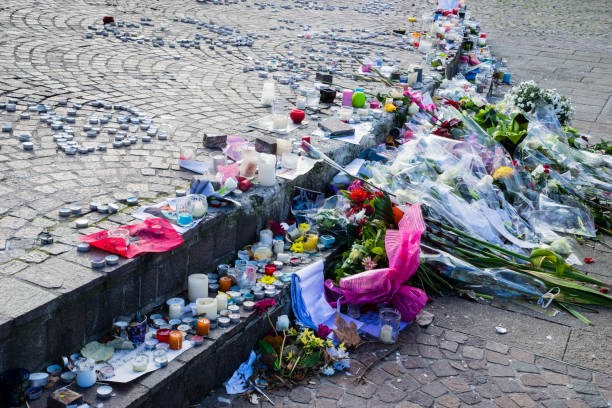
So here we are back on the continuous American hamster wheel of mass shootings. And lip-service platitudes about loss of innocent lives immediately segue into claims there’s no way to stop “crazy people.” And then denials follow, that guns and easy access to them aren’t the problem, that mental health is, though without providing sufficient resources to make such services at least as accessible.
Personal Reflections: A Small Town’s Nightmare (1974)
For me, every event throws up a twist/twinge of memory. Nearly 50 years ago, I lived in a small town shocked, appalled, trying to make sense after a school shooting. That was 1974, years before the term was even coined. I was an elementary-school librarian in Olean, NY. The job wasn’t a good fit for me, so Christmas holidays came as a relief, till a 17-year-old honor student walked into the high school with a rifle equipped with a telescopic site. Before police got to him, he shot and killed a janitor inside and then sniped at passing traffic, killing another man and a pregnant woman and her unborn. Townsfolk considered this a one-off—a disturbed kid gone off the rails. Lucky, everyone agreed, that he didn’t wait till the following week, when, with school back in session, he’d have had so many more targets.
The Evolving Weaponry: From Telescopic Sights to Assault Rifles
Back then, we had no idea such assaults would become a recurrent national trope. Still, the town fell into what’s now become a familiar pattern of focusing more on the shooter than on the victims. He was the subject/actor, while they were the objects/acted upon, props in his drama. They’d done nothing to attract the violence, just happened to be in the wrong place at the wrong time. And so, we only learned their names and single-sentence bios, and they quickly faded from view, except in memories of grieving loved ones. Weapons of choice, on the other hand, have morphed from telescopic sites to high-caliber assault rifles that liquify organs and create large cavities in bodily tissues (Emma Bowman, Ayana Archer. This is how handguns and assault weapons affect the human body. NPR. June 6, 2022). The Uvalde shooter bought his gun, a Daniel Defense model featured in a single-shooter online game, just after his 18th birthday. How horrific that injuries to children, like the 4th graders he shot and killed, are even more severe, because their organs and arteries are so much smaller.
The Significance of Social Dynamics: Peer Profiling
Now, I only remember details about the Olean shooter. He was on the school gun team, which had a practice firing range in the high-school basement. Considering what had just happened, I wondered if those were the best choices. He was a loner, known for wearing a camouflage jacket and called “GI Joe” by other kids. Similarly, even before, peers had already nicknamed the young man in Texas “School Shooter.” I find social/police profiling problematic and understand how cruel kids can be to each other. But shouldn’t someone in authority pay more attention to such interactions?
Personal Connections: A Mother’s Hope Shattered
In Olean, a woman I knew had become friends with the shooter’s mother when their sons were born the same day, and they shared a hospital room. I didn’t notice then that she never said what she thought of the son. She pitied the mother for clinging to the illusion he could somehow be rehabilitated back to regular life. In the end, it all became moot, because he hanged himself in jail without going to trial. For the best, a mercy, everyone agreed. Researching to write this, I actually found a Wikipedia page. Should I have been surprised? Not really, given the fascination with shooters’ whys and wherefores. I read text from one of his three (?!) suicide notes. “ ‘Why?’ I don’t know — no one will. What has been, can’t be changed. I’m sorry. It ends like it began….someone might think it selfish or cowardly to take one’s own life. Maybe so, but it’s the only free choice I have. The way I figure, I lose either way. If I’m found not guilty, I won’t survive the pain I’ve caused — my guilt. If I’m convicted, I won’t survive the mental and physical punishment of my life in prison.”
Understanding Motives: From Compulsion to Crisis
Almost 50 years later, we’ve sadly learned much more about motives, if you can call them that. They seem much closer to compulsions. Jillian Peterson and James Densley have identified “a consistent pathway” (Melanie Warner. Politico interview Two Professors Found What Creates a Mass Shooter. Will Politicians Pay Attention? May 27, 2022). “Early childhood trauma seems to be the foundation, whether violence in the home, sexual assault, parental suicides, extreme bullying. Then you see the build toward hopelessness, despair, isolation, self-loathing, oftentimes rejection from peers. That turns into a really identifiable crisis point where they’re acting differently. Sometimes they have previous suicide attempts.” I have no additional details on the Olean shooter, but what I do know suggests he was likely alienated and bullied. On his way to the high school, he told his brother he was going out to shoot at targets.
Suicide as a Final Act: The Dark Intentions of Mass Shooters
Suicide is the whole point, according to Patterson and Densley. “Mass shooters design these to be their final acts. When you realize this, it completely flips the idea that someone with a gun on the scene is going to deter this. If anything, that’s an incentive for these individuals. They are going in to be killed…. What’s different from traditional suicide is that the self-hate turns against a group. They start asking themselves, ‘Whose fault is this?’ Is it a racial group or women or a religious group, or is it my classmates? The hate turns outward. There’s also this quest for fame and notoriety.” The Buffalo shooter posted a racist, anti-Semitic, manifesto online, tried to kill himself but failed. Charged with hate crimes, he’s plead not guilty. No idea what defense he can mount since he also streamed live video of the shootings online.
The Diversity of Faces: White Shooters and Mental Health
In photos, the Olean, Buffalo and Texas shooters are all white. They appear boyish, because they were/are only 17 or 18. Can these be the “faces of pure evil” a’ la Texas Governor Abbot? This as Mental Health America ranks his state last in the nation for access to mental care. As Densley stated, “these individuals have done horrific, monstrous things. But three days earlier, that school shooter was somebody’s son, grandson, neighbor, colleague or classmate. We have to recognize them as the troubled human being earlier if we want to intervene before they become the monster.” Peterson added, “The Buffalo shooter told his teacher that he was going to commit a murder-suicide after he graduated.” But, “People aren’t used to thinking that this kind of thing could be real because the people who do mass shootings are evil, psychopathic monsters and this is a kid in my class. There’s a disconnect.” In 2019, Texas did take positive action, starting a program to identify and provide counseling and guidance to at risk youth, but sadly, with limited staff and funding, the program hadn’t reached Uvalde yet. Now, of course, that previously underserved community has jumped to the top of the list, though too little, too late (Texas was building a program to find troubled students and prevent school shootings. It hadn’t reached Uvalde yet. Karen Brooks Harper. Texas Tribune. June 2, 2022).
Community Responses: From Inaction to Legal Battles
The recent cacophony of mass shootings indicates that a relatively high percentage of young(ish) white men with fault lines in their psyches can easily get hold of assault rifles. On the other side of the equation, actual and potential victims are no longer remaining passive, voiceless. Since their elders seem incapable of taking effective action, school children are again walking out and staging demonstrations to save their own lives. Sandy Hook parents have won lawsuits against Remington Arms, maker of the gun used there, for marketing in violation of state law, and against a promoter of “false flag” claims they faked the brutal murder of their own children. Buffalo and Uvalde survivors and families will testify before Congress and some among them appear ready to take legal action against Daniel Defense for marketing practices that target adolescents and children. Admittedly, that will be harder in Texas than in Connecticut.
Hope for Change: Listening to Survivors and Learning
I think of Warren Zevon’s line “Send Lawyers, Guns and Money” and hope we might finally be nearing a tipping point, where at least a degree of reason and sanity could actually prevail. After all, survivors and families are the only ones among us who’ve gone through the fire, can report on “near death” experiences. Ghislane Boulanger, in The Continuing and Unfinished Present (in Listening on the Edge: Oral History in the Aftermath of Crisis. edited by Mark Cave and Stephen M. Sloan. c2014), referenced French psychoanalyst Jacques Lacan. He described survivors of massive trauma as living “between two deaths.” Although the biological end has not happened, “they are outsiders; intimate knowledge of mortality has robbed them of their citizenship within the ranks of the living.” Speaking from that in-between space, they have much to teach us, if we’re willing to learn. But Lacan issued a warning too. If we continue to let “biological death occur without symbolic closure for the dead, without the proper settling of accounts…then the dead will haunt the living.” Trauma always has consequences, prices to pay, even for those who try to deny.