

Weekend Shockers: Do Major Events Always Happen on weekends?
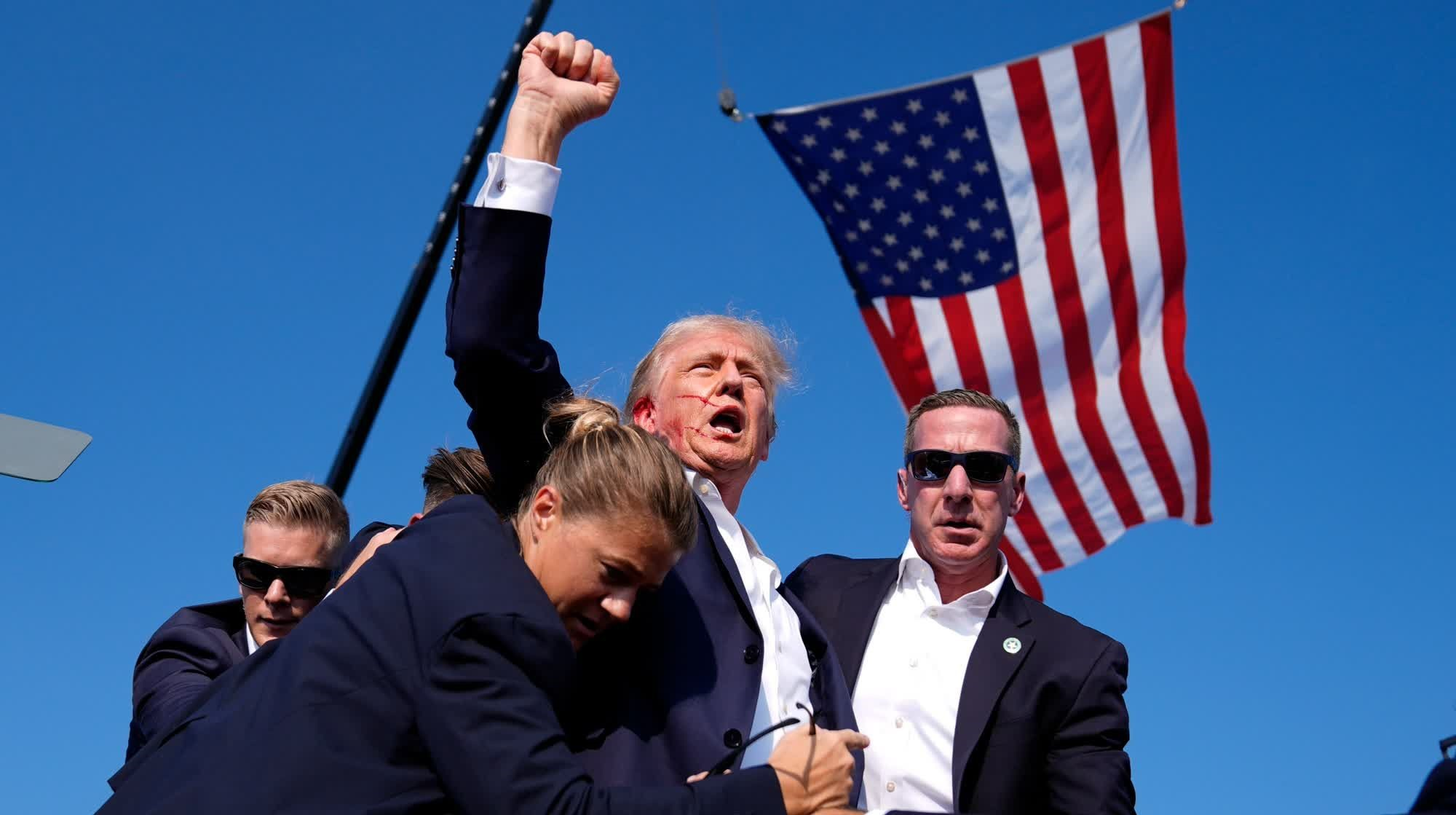
Is it a Murphy’s Law that big things happen on weekends? Whether or not, it’s held true recently. One Saturday, a friend and I on a short getaway heard of the failed assassination attempt on the ex-president. Back home, just over a week later, the current president made his Sunday announcement he was withdrawing and endorsing his vice-president, a woman of color, of mixed Black and Asian heritage. My friend and I traded texts: hard to imagine what might come next. Could be a whole new ballgame?
Immediate Reactions: The Emotional Rollercoaster
Trauma slaps like an out-of-nowhere gut punch, adrenaline and shock mixed with disbelief/denial. How’d that happen? And then, for survivors, there’s the quick realization it might have been a lot worse and the urge not to think too much about what-ifs. Jon Stewart of the Daily Show captured the progression and was widely cited/quoted in both political and entertainment media, this election sitting in between. The Guardian, The Daily Beast, Hollywood Reporter, Variety, etc. quoted: “We dodged a catastrophe.” Comedians often seem to have their fingers on the national pulse and voice what others may leave unsaid. He shared another common response. “I’m following social media…to find out who did it because it’s this pattern I feel like we now have in the country, when we hear about a horrific event. You’re on pins and needles in this sort of reverse demographic lottery to make sure that the psychopathic shooter doesn’t belong to one of your teams.”
Shooter Profile: What We Know So Far?
We still have only fragmentary backstory. And characteristic of the times, it’s hard to tease out fact from rumor. The FBI’s delving into social media (Maya Yang. A social media account possibly linked to Trump shooter under FBI scrutiny. The Guardian. July 30, 2024). But despite discovery of “more than 700 ‘extreme’ anti-immigrant and antisemitic comments from 2019 to 2020,” this looks less political and more like “lone wolf” stalker with mental health issues. Think the obsessed fan who sought to copy/appropriate John Lennon’s persona and life and then progressed to killing his “hero.” In photos, the shooter looked about 12 years old, a fresh-faced every-boy. He was just 20, in early adulthood when mental issues typically begin to manifest. And when anchors to social structures that might temper negative impulses are still unformed. He had researched depression. Did he feel himself slipping and tried to hold on? But he’d also researched whereabouts of various celebrities. So, maybe he couldn’t resist. And the rally was conveniently near his home. He’d registered to attend. He flew a drone over the site prior to the event. Yet another reminder that the world’s much less safe and secure than we like to believe. He borrowed his father’s AR weapon. What was his father doing with one, if that was even true? His parents had called police with concerns. Law enforcement officers occupied different floors of the same building, but not the roof. Though they were on nearby roofs. And folks at the rally reported sighting the shooter up there. So, as in Uvalde, TX, there were many dropped balls and convergences.
From Classroom to Crime Scene: A Potential School Shooter?
Seems this shooter may also fit a bit of lone-wolf school shooter. Two years out from graduation, perhaps he exported impulses he might have inflicted on fellow students into the community. The Secret Service recently released findings from a study to help guide prevention (Study Confirms School Shootings Are Preventable If You Know the Signs. sandyhookpromise.com). That site, curated by parents who lost very young kids in one school shooting, is intended to help reduce risks other families and communities will suffer similar trauma. So, no surprise being bullied often formed the core grievance and motivating factor (94%). Key signs of trouble are “…significant behavioral changes, sadness, depression, social isolation, escalating anger, and interest in violence.” Chilling that some “plotters spent as long as three years planning their attacks, providing ample opportunity for people to discover the warning signs and intervene before it was too late…many… posted disturbing messages on social media, changed behaviors, and caused concern among those around them.” Given the social media trail, had this shooter been planning for 4 or 5 years? Notable that classmates who reported to a trusted adult uncovered nearly two-thirds of thwarted plots. Again, since he was no longer in school, that did not happen in this case. Classmates were only interviewed after he acted.
Unraveling the Event: Conspiracy Theories and Facts?
Again, no surprise in these polarized times, that dueling conspiracy theories have sprouted like weeds. Did the ex-president’s campaign stage the “event” to garner more support? Was the attack coordinated by the “left” and/or “deep state?” The FBI Director, testifying to a Congressional committee, wasn’t sure whether the ex-president was struck by a bullet or by a piece of shrapnel. (Allie Griffin. Trump tears into FBI director who questioned if ex-prez was struck by bullet during assassination attempt. NY Post. July 26, 2024; David Rothkopf. Bullet? Shard of Glass? Welcome to Donald Trump’s Ear Wound Theater. Daily Beast. July 26, 2024). Could the projectile have been a piece of Plexiglas a bullet shaved off the teleprompter? Those pesky teleprompters again! Used to mock the current president for his memory lapses and then blamed by a speaker at the Republican National Convention for posting the wrong speech rather than the intended “softer, gentler” version written after the attempt. The questions could have been settled with standard practice of hospital after-action press briefing. But since that didn’t happen, we’re left to wonder. Meanwhile, the ex-president insists it was a bullet. And though he appointed this very FBI director, he now says, the man “knows nothing about the terrorists and other criminals pouring into our country at record levels.”
Words and Deeds: Presidential Responses to Violence:
The serving president issued a statement that such violence has no place in American life. Has he studied our history, not to mention recent headlines? Consider how this country has navigated previous overheated times. (Becky Little. Violence in Congress Before the Civil War: From Canings and Stabbings to Murder: 19th-century congressmen went to work carrying pistols and bowie knives—and sometimes used them on colleagues. History. Original July 24, 2019; updated Oct. 16,2023). Rep. Preston Brooks’ “Caning and beating [Senator Charles Sumner] to unconsciousness is probably the most famous violent attack in Congress, but it is far from the only one. In the three decades leading up to the Civil War there were more than 70 violent incidents between congressmen.” This gives context/perspective to current rules that prohibit bringing weapons into Congressional chambers. Feelings and language can run high, and “as the prospect of political violence becomes enmeshed in daily life, even an assassination attempt can come to seem routine.” (Stephanie McCrummen. ‘I Guess This is Normal Politics Now.’ The Atlantic. July 23, 2024). According to Wikipedia, assassination is most frequent in “countries in which the means of leadership succession lack regularity.” And perhaps where conflicts between traditional religious and secularizing elements are mounting? Could this country be lumbering/stumbling toward morphing another such country? The ex-president has been telling Christian followers to vote this time they’ll never have to again. (Michael Gold. Trump Tells Christians ‘You Won’t Have to Vote Anymore’ If He’s Elected. NY Times. July 27, 2024).
Inside the Mind of an Assassin: Psychological Insights?
With so much at stake, we still seem to know more details about celebrities (also essentially stalked) than about folks who may be prone to acts of nation-rocking violence. Does this indicate collective denial amplified by the twin blind spots of easy access to guns and limited access to mental health services? Do we just plain resist looking too closely at ourselves? Recall Walt Kelly’s old comic strip Pogo: “We have met the enemy, and he is us.” In a recent summary, Psychology Today found just three major studies (one dating back to 1984, and the other two more recent, both issued in 2016) of a combined total of 163 subjects who had “killed, wounded, or otherwise assaulted presidents, Secret Service personnel, or other persons of interest.” (Raj Persaud, MD. Inside the Mind of an Assassin: How the Secret Service has used psychological research to profile assassins. July 15, 2024). Key findings/conclusions seem depressingly consistent:
- Crushing sense of inadequacy, high levels of depression, anxiety, frustration and “liv[ing] in a fantasy world…that can eventually [seem to] offer a chance, once and for all, to prove themselves, to pull off one enormous undertaking, to get attention…from a world that has systematically ignored or rejected them.” And until then, individuals tend to “appear bland, …quiet, harmless…”
- “Nothing personal” against their targets: Instead, “the president [or other public figure] merely symbolized the frustrations they experienced or personified the ‘system’ that was forever letting them down.”
- One of the few dependable associations in emotional life is that frustration leads to aggression.
- Fame [in the digital age] has changed so that the public experiences aspects of a [perceived] connection [and expectations?]. And attacks become more personal.
The Wild Card of Unpredictability
Again, the “wild card” is the unpredictability. No indication if investigators directly asked subjects what set them off. Would they even be able to explain and articulate? The term Stochastic refers to a “random probability distribution,” which “may be analyzed statistically but not predicted precisely.” So, we …“[c]an predict [that violent acts] will happen, just not where or when.” A shooter is “someone who becomes activated and violent when triggered by outside pressures,” but “[n]o one can be sure which triggered individuals will become violent.” (Annalee Newitz. Stories Are Weapons: Psychological Warfare and the American Mind. Norton and Co. c2024.
Avoiding the Rush to Judgment
Easy, amid so much uncertainty, to succumb to the temptation to over depend on tools like profiling that seem to offer a degree of precision. And this may feed into police temptation to look for look only at “the usual suspects,” stereotype, rush to judgment, especially in high-profile and pressure cases. How often have we seen the trope celebrating obsessed and sometimes rogue cops who won’t sleep till “the criminal’s” caught? But then, consider the mass of wrongful convictions overturned by state Innocence Projects, as well as cases like NY’s infamous “Central Park 5” case, in which the former president played a major public role. “In 1989 five black and Latino boys were wrongfully convicted of raping a woman jogging in New York City. Leading the charge against them was a real estate mogul whose divisive rhetoric can be found in his presidential campaign today.” Leading up to the 2016 election, an article first published in New York Magazine and then in the Guardian provided a reminder. (Oliver Laughland. Donald Trump and the Central Park Five: the racially charged rise of a demagogue. Feb. 17, 2016). The young men, eventually exonerated, were the subjects of Ava DeVernay’s documentary When They See Us (2019). They won a decade-long lawsuit against NY City and were awarded $41M.
Cultural Climate Change: Finding Solutions Together?
Surely, almost 40 years later, we can learn to at least repeat the same mistakes less often. A good start could be each doing our part to lower the cultural temperature by toning down and no longer rewarding language that incites and amps up violence. Can we, like Sandy Hook parents and high school- shooting survivors, find meaning in uniting against the proliferation of guns that make it easier to act out murderous fantasies? Can we push instead to enhance access to mental and emotional support systems and services before things get that far?
Most important of all, can we keep remembering we’re all in this together? I find clues to a possible path forward in a collection of essays based on oral histories collected from survivors on the receiving end. (Mark Cave and Stephen M. Sloan, editors. Listening on the Edge: Oral History in the Aftermath of Crisis. Oxford University Press. c2014). “….What remains when the cameras turn away, and reporters go home, are individuals and communities [a country] in the process of redefinition, forever changed by the event. Exploring the process of this change in…the life of a community [a nation] can tell us a great deal about who we are and who we are likely to become.” And perhaps then we can start to heal ourselves and each other.