

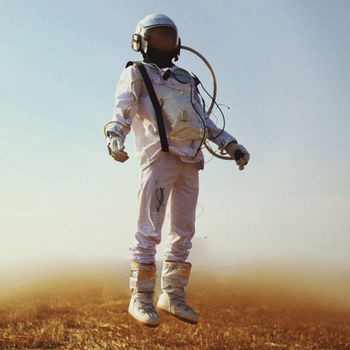
Bold Ventures or Wasteful Escapades? The Controversy Surrounding Space Exploration
Private sector voyages to the edges of space have attracted lots of attention. Of course, they have. Presumably the whole point for the billionaire proprietors—Bezos, Musk, Branson—is to show they can “conquer” yet another sphere. So, are these just escapist stunts and shameful wastes of funds that could be more productively spent addressing critical problems on earth? Or are they thrilling previews of an expanding future in this time that feels so constrained, so hemmed in?
The Silly Season of the Stars: Celebrities, Romance, and the Billionaire Space Race
Maybe they’re all of the above, depending on your perspective. And I’m thinking we might be witnessing a nuanced version of what in the UK is known as the “silly season.” That usually applies to slow-news times, which clearly this is not. But with no relief in sight, folks seem increasingly drawn to big gestures and fantasy a la “lifestyles of the rich and famous.” So now, alongside news of celebrity romances and splits, we have the spectacle of rocket launches, takeoffs and returns.
Privatizing the Cosmos: From Government Territory to Billionaire Playground
Outer space, once the preserve of governments, has been privatized and colonized by super-rich entrepreneur showmen. And the enterprise turns out to be far more manageable than trying to solve stubborn, complex, earth-bound problems. In fact, space travel is an extension of the big tech businesses they’ve already grown and run. And so, Bezos, Musk, Branson, et al. add another dimension to their personas, morphing into billionaires in space, superheroes sans capes. Did they always have sci-fi dreams? Or did they recognize “the next frontier?” Branson was already famed for efforts to circumnavigate the globe in hot air balloons. Bezos is Time magazine’s current “Man of the Year.” And our heroes, who’ve made their money on tech we can no longer do without, are busy monetizing, coordinating pricey space tourism into the lower reaches for those who can afford it. William Shatner was comped a subsidized ride to live out his Star Trek role in more or less real time.
Tech Tycoons Turned Space Explorers: Morphing into Billionaires in Space
So, is this a dystopian or a utopian trend? Is it a kind of fatalism about our future that’s gotten out of hand? It’s not as if nobody saw something like this coming. Of course, there was Flash Gordon, and Stan Lee’s Marvel Universe and Star Trek and Star Wars in pop culture. Back in the 1960’s, President Kennedy called the space race with the Russians “the moral equivalent of war.” There’s also the illogical foresight of song lyrics. David Bowie’s Space Oddity of 1969, the same year as the first moon landing, with Major Tom lost in space. Elton John’s Rocket Man of 1972 was inspired by Ray Bradbury.
Dystopia or Utopia? Unraveling the Trend of Space Tourism
Hannah Arendt got there even earlier, in 1958, when she called Russia’s 1957 Sputnik launch an “event second in importance to no other not even the splitting of the atom.” And the immediate reaction was often relief over the “first step toward escape from man’s imprisonment to the earth.” Official, respectable, attention could no longer ignore what until then had “been buried in the highly non-respectable literature of science fiction (to which, unfortunately, nobody yet has paid the attention it deserves as a vehicle of mass sentiments and mass desires).” Well, that certainly seems to be changing.
Ahead of the Curve: Heroes, Marketing, and the Limits of Science
So, our self-styled heroes are likely onto something, ahead of the curve, as they’ve so spectacularly been in their previous ventures. And they’re far better at marketing than science, which as Arendt noted, can demonstrate in mathematical formulas and proofs, but becomes tongue-tied with “normal expressions in speech and thought.” We’ve seen that again in the pandemic. Elton John sang as much in fewer words. “And all this science I don’t understand. It’s just my job five days a week.”
Aspiring to the Cosmos: Balancing Dreams of Space and Earthly Realities
Arendt might have been referring to our heroes when she wrote that we, “who are earth-bound creatures have begun to act as though we were dwellers of the universe.” But of course, even with access to huge shares of the world’s wealth, there are limits. Realistically, Bezos, Musk and Branson may have made it to space, but only for short visits. And they can only haul a few people at a time and just to the edges. And even if they could go farther, there’s no place livable to go to.
So, perhaps these are stunts, but they might also be potentially aspirational. There is that human urge to go farther. Consider the Age of Exploration (read Colonization). But for now, and far into the foreseeable future, we will be here. And perhaps, not expecting any miracles or quick fixes, we could, to quote another song, “Brighten the corner where we are.” And do what we can, a bit at a time, to chip away at some of our stubborn earth-bound problems. Maybe not as exciting, but more realistic and effective for now.